
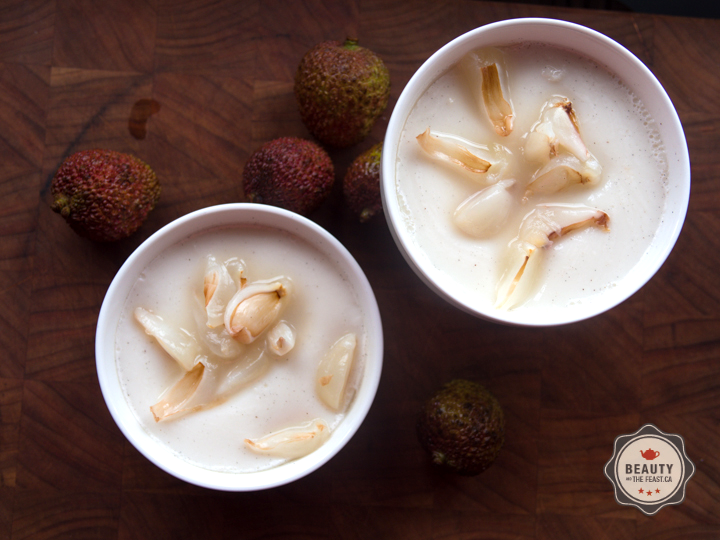
Hooray! It's lychee season so it'sall about cramming as much fresh lychee eating in as possible before they go away for the year! One of the things I most enjoy is cold lychee after a long hot day. Fans of Asian desserts are no stranger to fragrant coconut milk with delicious, sweet lychee. I've prepared a popular coconut milk lychee recipe for you today.
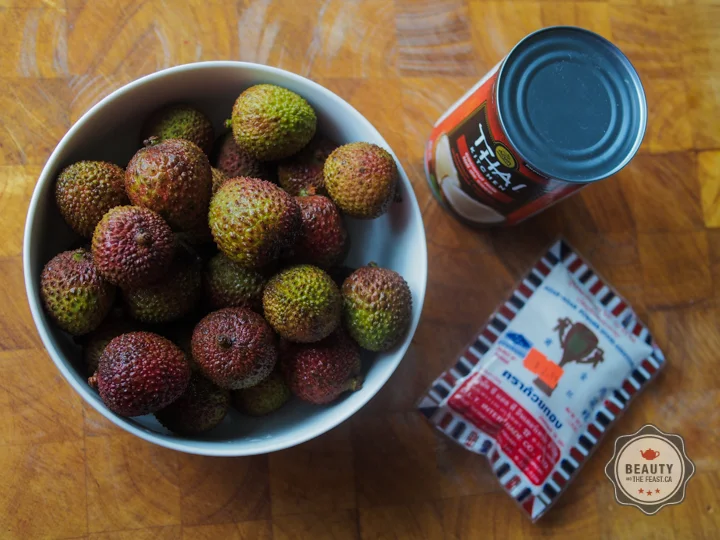
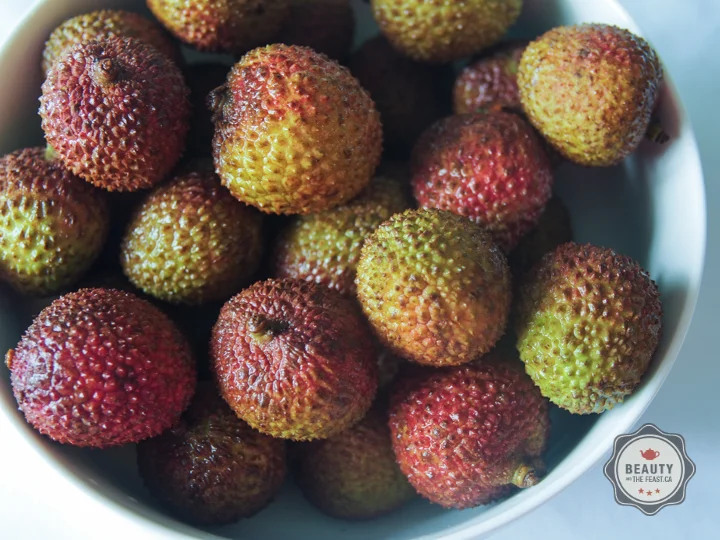
Lychee (or Litchi) is a tropical fruit native to Guangdong and Fujian provinces of China but is cultivated and savored all around the world. China remains the main producer followed by India but is also grown in Japan, Mexico, Australia, America (California, Florida, Texas) and Southern Africa. Unfortunately it is not nice enough to grow it here, else I would be the first!
While selecting a coconut milk for this dessert, I had a hard time choosing what I'd purchase because the labels were so confusing. Coconut milk can be purchased for as low as 75 cents to as much as $3. Surely with this price disparity there had to be a reason why! I was horrified to see the amount of chemicals that go into the cheaper coconut milks as well as decreased amount of real coconut. The cans varied with coconut extract from 20%-80% but what did this all mean?
Twenty years ago in rural Thailand, coconut milk was made handmade daily by squeezing it. Premium coconut milk is made by squeezing grated coconut meat through a cheese cloth. The result is a thick coconut milk that is typically 20%-22% fat and because it is enjoyed in its purest form is usually used for desserts.
Light or thin coconut milk is made by soaking the meat in warm water and then squeezed for a second or third time. It is about 5%-7% fat and may be used in soups and general cooking as it is mixed and the flavour doesn't need to be as pungent. Given a choice, I wouldn't recommend it as it can sometimes be thickened with flour and has alot less flavour than thick coconut milk but you decide if it's worth the cost.
An official world standard can be found at Codex Alimentarius, STAN 240-2003.
What the chemicals in your coconut milk do:
- Stabilizers/Thickeners: Guar Gum, Xanthan Gum, Gellan Gum, and Sodium Carboxymethyl Cellulose.
- Preservatives: Sodium Benzoate
- Emulsifiers: Words that begin with Poly and Mono.
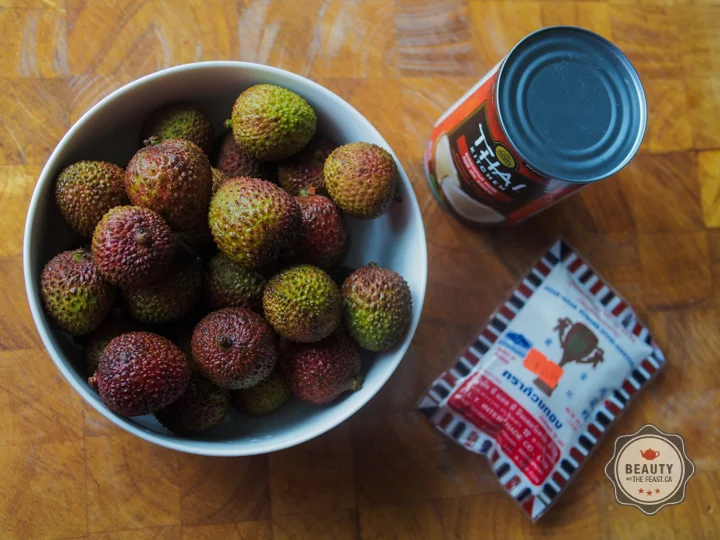
I chose a mostly pure coconut milk by Thai Kitchen, because it had coconut milk (not extract or water) as the first ingredient. Ingredients on a label are ordered by the ingredient in most quantity to least so by this logic it should be more pure. The only other ingredients were water and guar gum. It was $2.99/can.
I also learned...
- You can substitute coconut milk for coconut cream.
- You can substitute coconut cream for coconut milk. It will be slightly less rich tasting and have less fat content.
- You can make your own low-fat version of coconut milk by adding water or broth to decrease the fat content, but keep the flavor content.
Lychee Jelly Dessert
12 g Agar Agar Powder
400ml can of coconut milk
3 c water + 1.5 c cold water later
2 c whole milk
1 c sugar
1 teaspoon of vanilla powder (optional)
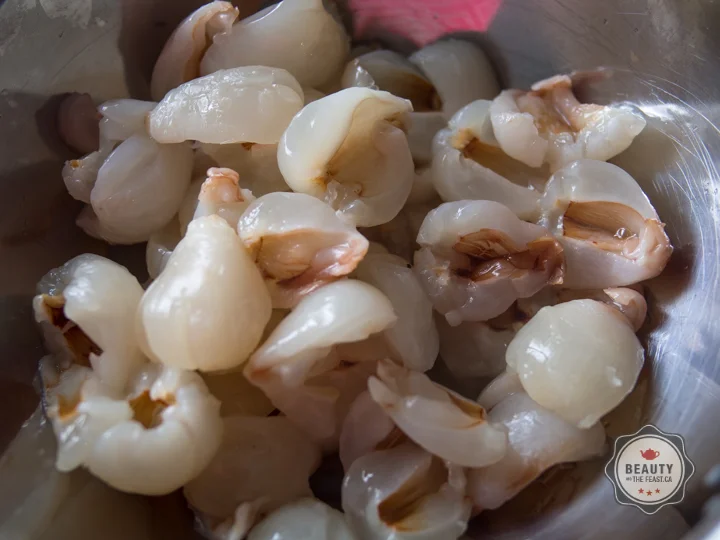
2 c of chopped lychee - fresh if in seasonal or canned if not.
In a large pot, mix 3 cups of water and 1 cup sugar together.
Save half a cup for later.
Add milk, coconut milk, vanilla powder and agar agar.
Bring to a gentle boil for 30 secs.
Add remaining cold water (1.5 cups), while stirring.
Pour into shallow dishes. Let cool a little on the counter for about 10 mins to firm up a little and then top generously with lychee. If you do it too early, the lychee will sink to the bottom.
Chill in fridge until set - a few hours.
Serve cold with a few spoons of the reserved sugar syrup on top. I served it with a Mint Lemon Syrup I made with a bunch of extra mint that was growing wild in our yard. Waste not, want not!
Makes about 6 cups of dessert. Yum!
Fun Facts about Lychee:
- Lychee is available from May until October.
- Lychee is an excellent source of Vitamin C.
- Nine fruits would meet an adults recommended Vitamin C requirement. (oh dear can I OD on these?)
- Studies suggest that consumption of fruits rich in vitamin C help the human body develop resistance against infectious agents and scavenge harmful, pro-inflammatory free radicals.
- Lychee is known for being a fruit with "hot" properties in traditional chinese medicine. I remember getting nagged a lot by my grandparents to not eat too much because it was too 'heaty'.
- Lychee has high concentrations of oligonol which is a natural antioxidant that has beneficial effects such as improvement in blood circulation, diabetes, protection against UV damage, overall improvement in skin and health.
- Encephalitis is a deadly viral disease which may be spread through consumption of lychee fruit. The disease appears to affect only children based on cases reported from India and northern Vietnam where it was called Ac Mong encephalitis after the Vietnamese word for nightmare. Yikes.
- Asians (my mom) enjoy lychee in soup.
- A lychee tree may reach 40-50ft in height and is evergreen.
Lychee carries minerals like potassium and copper. Potassium is an important component of cell and body fluids help control heart rate and blood pressure; thus, it offers protection against stroke and coronary heart diseases. Copper is required in the production of red blood cells.
The fruit must be tree ripened as it stops the ripening process once it has been picked.
Over maturity makes them turn brown which can result in a richer sweeter flavour.
Lychee is a very good source of B-complex vitamins such as thiamin, niacin, and folates. These vitamins are essential since they function by acting as co-factors to help the body metabolize carbohydrates, protein, and fats.
One tree in Florida was reported to have produced 1200 tons of fruit in a year.